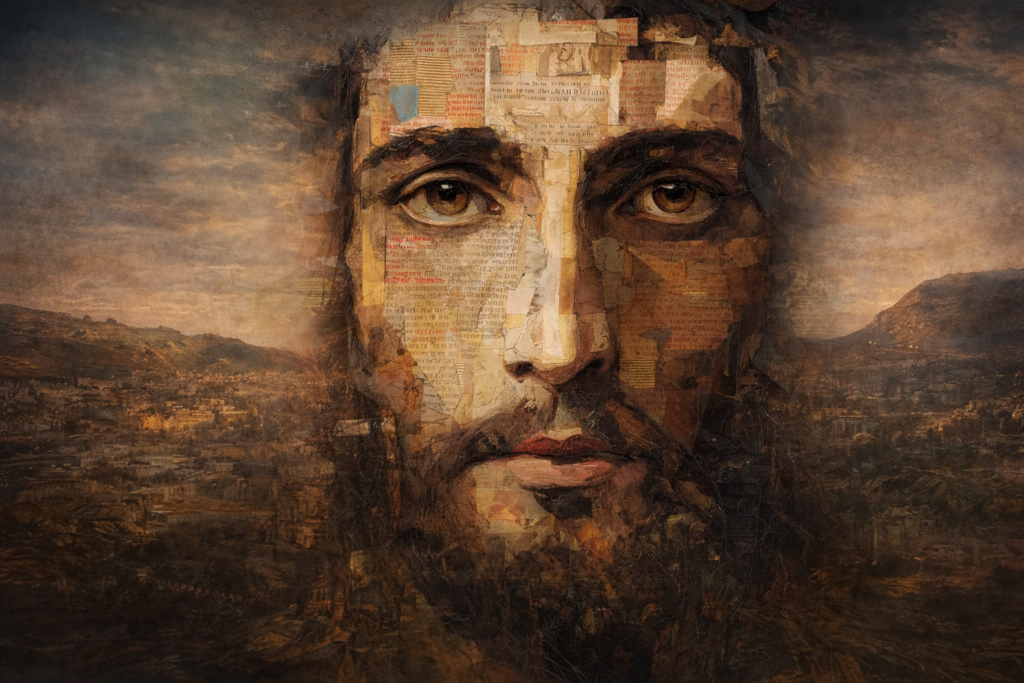
The Lord’s Prayer is not a habit; it is a revolution. The Lord’s Prayer Documentary (Angel Studios) with Dr. Brad Gray captures this beautifully and cinematically.
As a Doctor of Ministry student at Kairos University, I explore the pattern of prayer Jesus gave—commonly known as the Lord’s Prayer in Matthew 6:9–13—as both a theological and practical framework for spiritual formation and communal discipleship. Grounded in the teachings of Jesus, this work seeks to uncover the prayer’s meaning, theological depth, and structural significance, with particular attention to its Jewish roots and its reception in the early church. My doctoral project, The Way of Life: The Lord’s Prayer as a Path and Framework, integrates biblical scholarship, historical theology, and practical ministry application through both curriculum development and a publishable dissertation.
The Lord’s Prayer Documentary
I was genuinely excited when The Lord’s Prayer documentary from Angel Studios was released during the final stage of my research. I first learned about the project from Dr. Carmen Imes Joy (Biola University), who appears in the film during the petition to keep God’s name holy. Imes has become a trusted voice for me on the theology of God’s name—a theme that runs through the Old Testament and carries forward into the New Testament as God’s people are called to bear that name through prayer and embodied, ambassador-like living.
Narrated by Brad Gray, the documentary takes viewers on a cinematic journey through the landscapes where Jesus first taught this prayer. Featuring insights from N. T. Wright, Jonathan Pennington, and others, it explores the prayer’s cultural, historical, and spiritual depth. Shot on location throughout the Holy Land, the film brings Jesus’ most familiar prayer into fresh focus through place, story, and context. It is unlike any documentary on the Lord’s Prayer I have encountered.
Behind the Lord’s Prayer Documentary
From what I read on Church Leaders, Brady Gray has shared that the project began through a personal spiritual awakening while studying the Sermon on the Mount for his own enrichment. Despite years in ministry, he realized the Lord’s Prayer was familiar yet neglected. That realization launched a seven-year journey that reshaped his prayer life and eventually became a documentary designed for both believers and those exploring faith. At just over an hour, viewers are introduced to the places, ideas, and paradigms that shape the prayer Jesus gives his followers.
This Is More Than Ritual. It is Revolution.
Early in the documentary, Gray frames the Lord’s Prayer with a line that sets the tone: “Before it was a ritual, it was a revolution.” That statement lingers because the film consistently resists treating the prayer as mere liturgy. Instead, it invites viewers to see it as a reordering of reality—a prayer that reshapes how we see God, ourselves, and the world.
Our Father: Relearning Intimacy
When Jesus says Our Father, the documentary rightly draws us back to Israel’s story. For Jesus’ first hearers, this language would have triggered memories of the Exodus—when God first revealed himself as a Father bent on freedom and deliverance.
God could have chosen to reveal himself in countless ways, yet he chose to reveal himself as Father. This was not sentimental language, but covenantal and relational. Though Exodus 3:13 emphasizes God’s revealed Name, the broader Exodus narrative frames God as a Father who rescues, provides, and forms a people.
N. T. Wright notes that many people have never fully registered the intimacy of Our Father. God is not a faceless bureaucrat. He is a Father who delights in his sons and daughters and invites them to delight in him. Wright suggests that if we could truly grasp this, everything else in the prayer would begin to fall into place. Jesus calls us to approach God like children—dependent, trusting, and unguarded.
Who Is in Heaven: Nearness Without Distance
For Jesus’ audience, “in the heavens” would have immediately echoed Genesis. God is the Creator-King who rules all things from the heavens.
Yet the documentary does a good job holding together transcendence and nearness. From the beginning, Scripture shows not humanity climbing toward God, but God moving toward humanity—walking with Adam and Eve in the cool of the day, dwelling among Israel, and ultimately drawing near through the incarnation of Jesus. God’s rule from heaven never cancels his closeness.
Holy Be Your Name: Bearing God’s Reputation
This is where Carmen Imes’ contribution shines. Drawing from Sinai, she explains that Israel was called to live in a way that revered God’s name and did not misrepresent him to the nations. This petition in the Lord’s Prayer borrows directly from that covenantal realization.
In Hebrew, this language invokes treaty and commissioning imagery. To “hallow” God’s name is to represent him faithfully, like an ambassador. The Ten Commandments were not merely rules but a way of bearing God’s name in everyday life—how fields are plowed, clothes are made, animals are treated, and money is handled.
This priestly calling explains why Israel is called “a holy nation.” Once you see this, Imes notes, it appears throughout the Old Testament—Psalm 23’s “for your name’s sake” being just one example of this thread throughout the First Testament. The documentary helps recover the weight of this petition as a call to embodied faithfulness.
Your Kingdom Come, Your Will Be Done: Eden Restored
Jonathan Pennington brings a helpful lens here. Jesus comes not merely to save individuals, but to restore creation. The Kingdom of Heaven is coming to earth.
The documentary emphasizes that the kingdom theme runs throughout the Old Testament, even when it is not named explicitly. The goal has always been the creation of a people who live together in a way that reveals who God is. Matthew summarizes Jesus’ mission as proclaiming the “gospel of the Kingdom”—the good news that God is returning to restore his reign.
Pennington’s line captures it well: “As these things are true in heaven, make them true on earth as well.” This is Christianity at its core.
Give Us This Day Our Daily Bread: Trust Beyond Empire
This petition pulls us back to the wilderness again. Despite Israel’s grumbling, God responds with compassion, raining down bread from heaven.
But the documentary adds a critical historical layer. Jesus’ audience was living under Roman occupation. Daily bread was political. When Rome seized Egypt, it controlled the grain supply. Nearly 1,700 ships carried grain from Egypt to Rome, keeping the lower classes alive through controlled provisioning.
Against that backdrop, Jesus’ words are quietly subversive. Daily bread does not come from Rome or government power. It comes from God above. As Brad Gray emphasizes, this is something God does for his people.
The Lord’s Prayer is intentionally plural. God meets our needs so that we can meet the needs of others. Provision is never meant to terminate on the self.
Forgive Us Our Debts: A Life-Giving Flow
Drawing on Rabbi Jonathan Sacks’ insight—“To live is to give”—the documentary presents forgiveness as central to God’s economy and identity in a liberated life.
Forgiveness is meant to flow both ways. To refuse it is to invite decay and death. To pass it on is to create life and wholeness. The image of the Dead Sea versus the Mediterranean captures this well: one receives but gives nothing back; the other sustains life by giving what it receives.
Lead Us Not into Temptation, but Deliver Us from Evil: Faithfulness in Testing
The documentary carefully notes that the word translated as temptation can also mean testing. Temptation lures people away from God toward self-reliance. Testing, however, comes with good intentions—to build endurance and deepen trust.
The audience would have immediately thought of the garden, where testing preceded temptation, and of Israel’s wilderness experience. What God presents as a test, Satan distorts into temptation.
In Jesus’ own temptation, he embodies the Lord’s Prayer itself: not my will, but yours be done.
Final Reflections: An Anchor for the Sermon on the Mount
Carmen Imes Joy and N. T. Wright were among my favorite voices in the documentary, but Jonathan Pennington stood out as someone I had not previously engaged. Pennington offered some of the most thought-provoking insights for me this time around. Overall, throughout this documentary, I appreciated the intense attention to place and paradigm surrounding the Lord’s Prayer.
At the same time, I found myself wishing the film had explored more fully how the Lord’s Prayer functions not only contextually, but also as a pathway of confession and a theological framework. We are forced with biblical and historical lands and ideas, but more theological work could have been presented. The prayer is not only a reference back to the Old Testament; it also functions like a card catalog for an oral culture—helping disciples remember the teachings, miracles, and way of life of Jesus.
Recommending The Lord’s Prayer Documentary
At the end of the day, I will watch this again. The Lord’s Prayer is an anchor within the Sermon on the Mount, and this documentary helps us see how it is meant to define who we are and how we live. It reminds us that prayer is not merely something we say, but a way of life we are invited to inhabit.
Watch on Angel Studios